From 1937 to 2025: Louisville's Floods and the Mold That Follows
Louisville has lived with Ohio River floods for its whole history, and the record shows the river and the rain both deserve respect. Here is that record from public sources, and what any homeowner should check once the water goes down.
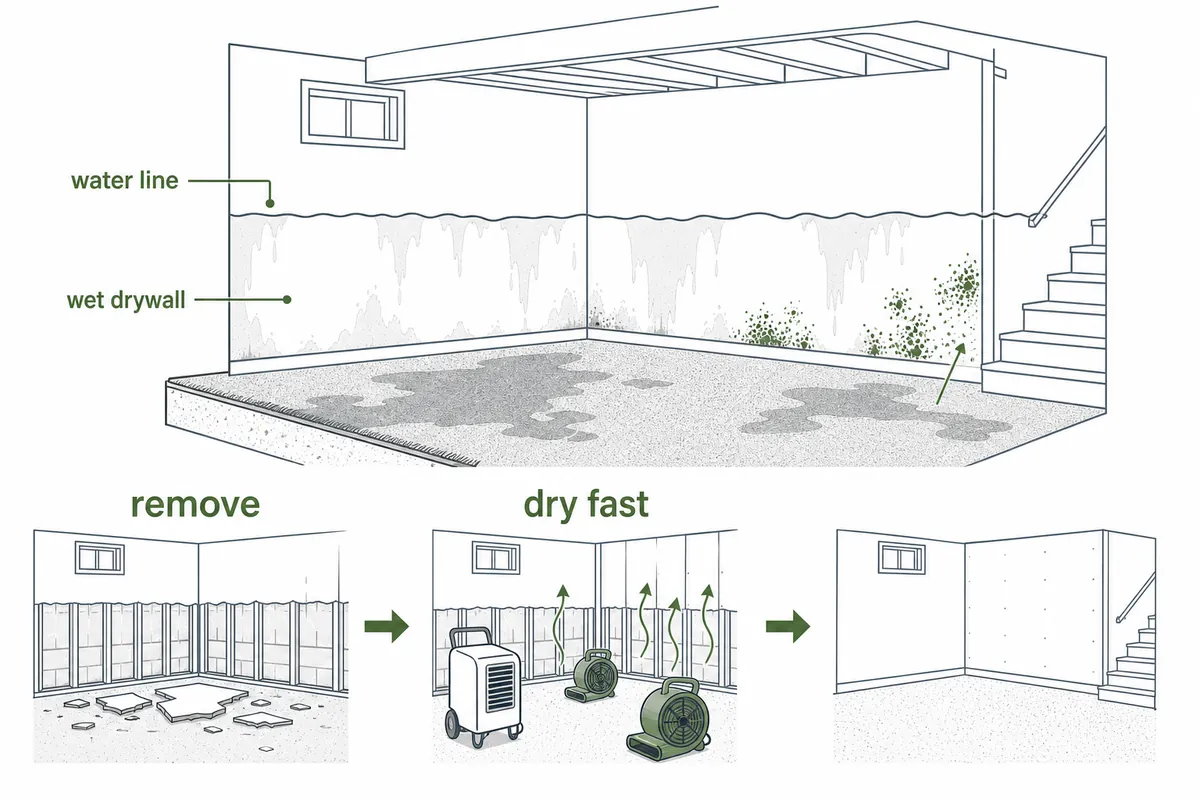
The Ohio River at Louisville's McAlpine Upper gauge set its record of 52.15 ft on January 27, 1937, and reached 36.63 ft on April 9, 2025; minor flooding starts at 23 ft (NWS). Whatever floodwater or storm runoff soaked needs drying or hauling out quickly, ideally inside two days, or mold usually gets a start.
The Great Flood of 1937
About fifteen inches of rain fell on Louisville in twelve days, January 13 to 24, 1937, and more than 19 inches fell over the month, according to the National Weather Service. The river crested on January 27. NWS Louisville's account says seventy percent of the city was submerged and 175,000 residents had to flee. That crest remains about ten feet higher than the second-highest on record, 42.1 feet in March 1945.
The floodwall, and Ohio River floods since
The 1937 disaster led to Louisville's flood protection system. The Metropolitan Sewer District says construction began in 1948 and took nearly 40 years; today the floodwall runs 29 miles and protects about 110 square miles, with 16 flood pump stations moving rainwater from behind the wall into the river. During the 2025 flood those stations pumped more than 12.1 billion gallons, MSD reports.
Big crests keep coming. The McAlpine Upper gauge reached 38.76 feet on March 7, 1997, 35.72 feet on February 26, 2018, and 36.63 feet on April 9, 2025 (NWS). At 27 feet, the NWS notes, River Road floods at many points from 3rd Street to Glenview.
Rain does the most damage to basements
The floodwall holds back the river, but heavy rain falls on both sides of it. In March 1997 the NWS Louisville office measured 10.50 inches of rain in 24 hours, and MSD says more than 50,000 residences had some flooding that year. On August 4, 2009, 4.53 inches fell at the airport, three of them in one hour, and many basements flooded (NWS). For a step-by-step list of the first two days, see water damage and basement mold.
What should you check for mold after a flood?
- Basement walls: cut finished drywall or paneling well above the water line and let the wall behind it dry.
- Floor drains and sump pits: clean out silt, and check that the pump still runs.
- Furnace and water heater: don't fire up anything that was underwater until a technician has looked at it.
- Belongings: hard items can usually be cleaned; upholstered furniture and paper that stayed wet are often a loss.
- Smell: if the basement still smells sour after seven days, some material never dried.
If mold has already started, the price ranges for mold remediation show what different jobs typically run.
Tell us where the mold is
Tick the option nearest your situation, then mention the room and whether it has been wet lately. A Louisville mold specialist rings you to discuss it.